Coastal Urban Regeneration and Ecosystem Restoration: Relocation Strategies for Climate Crisis Migrants
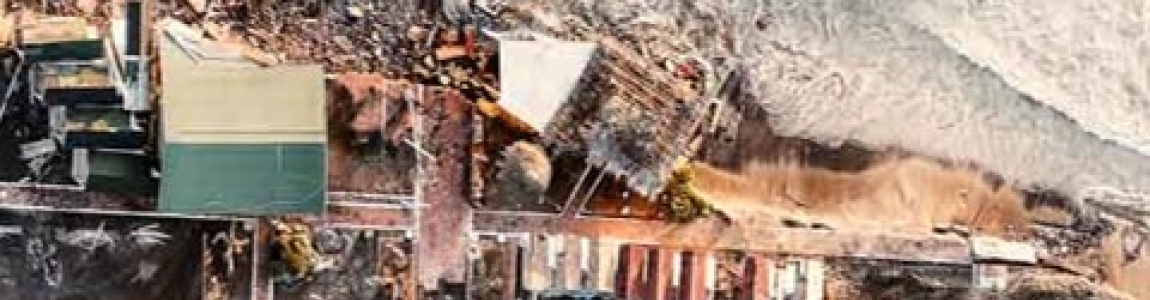
Climate change, which has become more and more extreme and frequent in recent decades, is now the focus of scientific and disciplinary debate and undoubtedly represents one of the next challenges with which the 'global risk society' (Beck, 2011) will have to contend, both because of its growing impact on cities and territories, and because of the empirical evidence of the economic, social and environmental damage it causes. Among the territorial impacts of ongoing climate change, the flooding of urban coastal areas, which the rise in sea level contributes to, along with a multiplicity of other factors, is undoubtedly one of the most evident. In this context, the Proposal focuses on issues concerning the definition of urban regeneration strategies in urban areas affected by risk phenomena related to climate change, through the integration of adaptive measures, dynamic processes and sustainable spatial development. The research intends to respond to the instances outlined through the identification of site-specific actions for the reconnection and reconfiguration of morphological components and the restoration and recovery of environmental ones based on an assessment of the ecological and urban context to identify in which territorial areas it is possible to regenerate urban areas and in which, instead, it is necessary to restore ecosystems. Specifically, it focuses, also through an experimentation conducted on one of the 33 Italian coastal areas at risk of sea level rise (Antonioli et all., 2017), on settlement 'delocalisation/relocation' strategies to outline methodological-experimental and operational references that allow policy makers to adopt new climate-proof development models within policies and planning tools.
Responsabile del Gruppo
Carmela Mariano